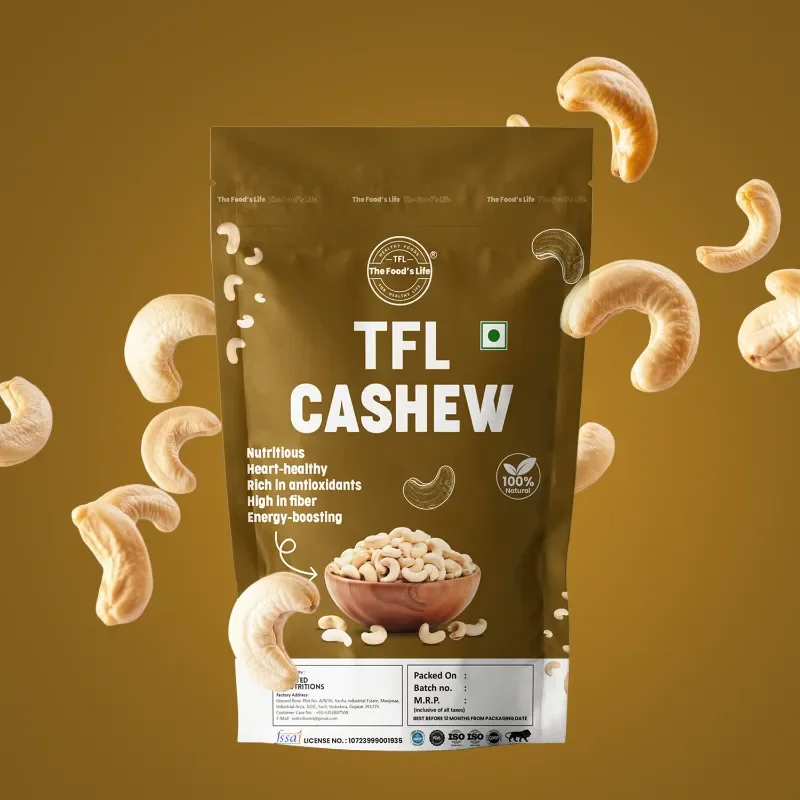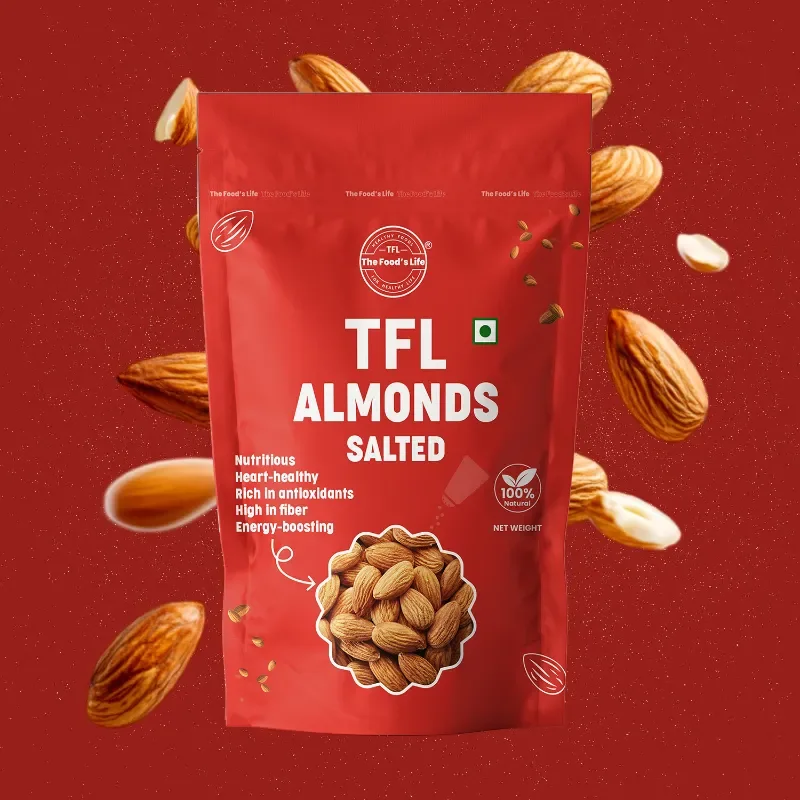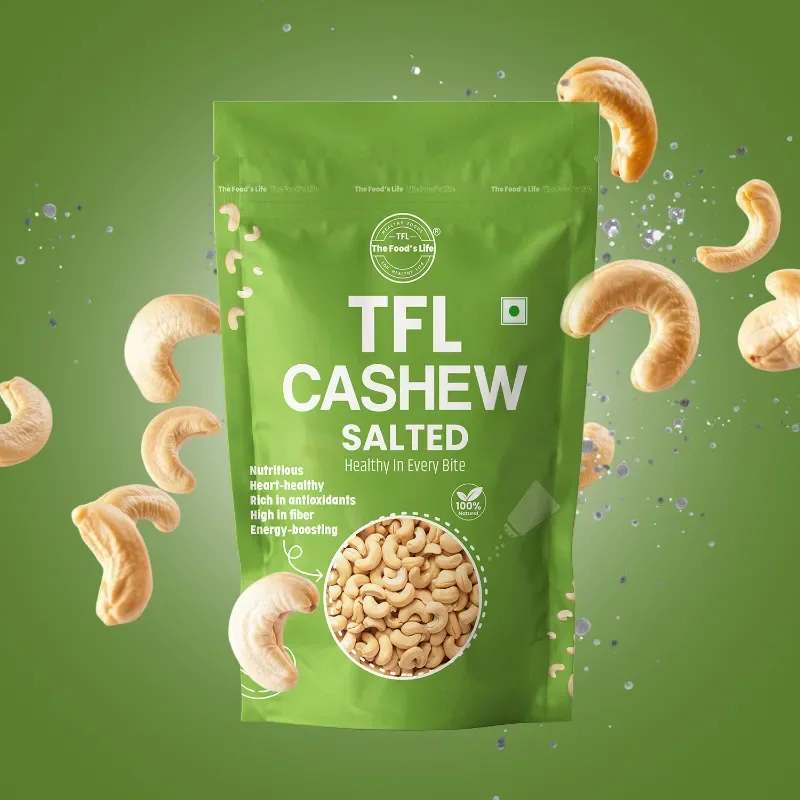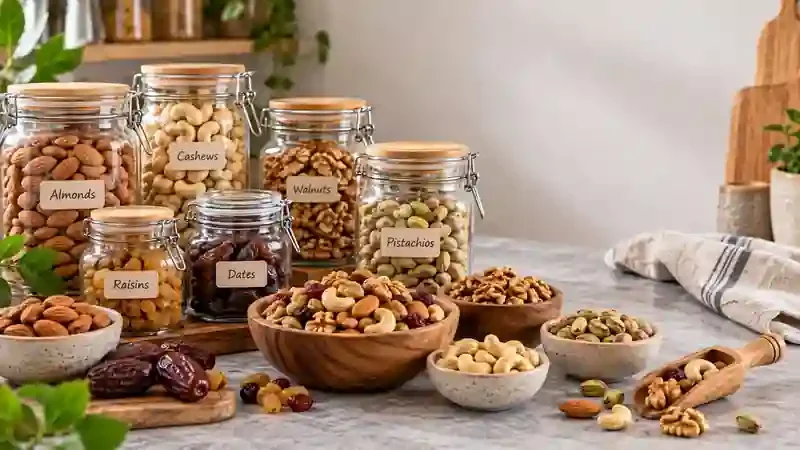
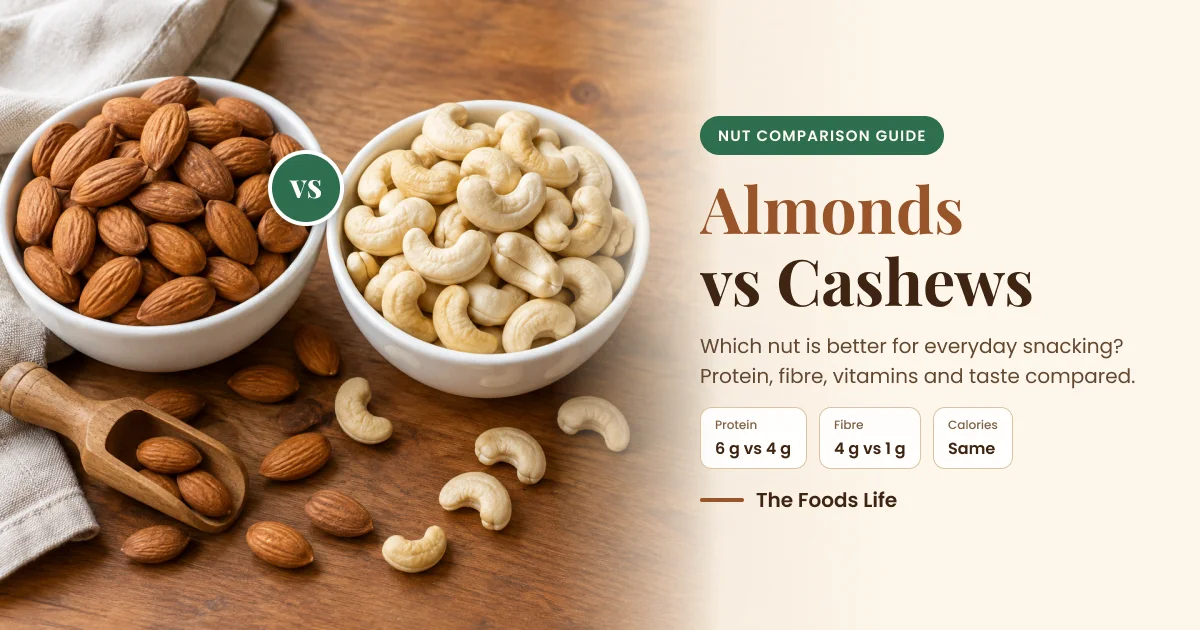
Open any Indian dry fruit box and two nuts always disappear first: badam and kaju. Both are crunchy, both are loved at festivals and both find their way into tiffins, trail mixes and chai-time bowls. But if you had to pick one for everyday snacking, which is better? This guide compares almonds vs cashews side by side: nutrition per handful, protein, fibre, vitamins and minerals, taste, cooking uses and which one suits your goals. The short answer is that both deserve a place in your kitchen, but for slightly different reasons.
Almonds vs Cashews: The Quick Answer
If you only have a minute, here is the summary. Almonds give you a little more protein and much more fibre, vitamin E and calcium per handful. Cashews are softer and creamier, slightly higher in carbohydrates, and richer in iron, zinc and copper. Calories are almost identical.
Choose Almonds If You Want
More fibre to stay full for longer, more vitamin E, more calcium, and a firm, satisfying crunch. Almonds suit people who snack between meals and want something that keeps hunger quiet until the next one.
Choose Cashews If You Want
A softer, buttery texture, a naturally mild sweetness, and more iron, zinc and copper. Cashews are also the go-to nut for creamy gravies, kaju katli and smooth chutneys.
The Best Choice for Most People
Eat both. Rotating almonds and cashews through the week gives you a wider range of nutrients and keeps snacking interesting.
Nutrition Comparison Per 28 g Handful
A 28 g serving is roughly a small handful: about 23 almonds or 16 to 18 cashews. The values below are approximate figures from the United States Department of Agriculture food database for plain, unsalted nuts (raw almonds and dry-roasted cashews). Packaged products vary, so always check the label on the pack you buy.
| Nutrient (per 28 g) | Almonds | Cashews |
|---|---|---|
| Energy | About 160 kcal | About 160 kcal |
| Protein | 6 g | 4 g |
| Total fat | 14 g | 13 g |
| Saturated fat | 1 g | 3 g |
| Carbohydrates | 6 g | 9 g |
| Dietary fibre | 4 g | 1 g |
| Vitamin E | 7.3 mg | 0.3 mg |
| Calcium | 76 mg | 13 mg |
| Magnesium | 77 mg | 74 mg |
| Iron | 1.1 mg | 1.7 mg |
| Zinc | 0.9 mg | 1.6 mg |
| Copper | 0.3 mg | 0.6 mg |
Not sure how to read these numbers on a pack? Our guide on how to read food labels explains it in two minutes.
Breaking Down the Differences
The table shows that neither nut "wins" on every count. Here is what the differences mean for everyday eating.
Calories: A Tie
Both nuts give about 160 kcal per small handful, so neither is a "lighter" choice. What matters is portion size. Both are energy-dense, so a handful is a snack, while a bowl is closer to a meal.
Protein: Almonds Lead
Almonds offer about 6 g of protein per handful compared with about 4 g in cashews. If you are trying to add more plant protein to vegetarian snacks, almonds give you a small but useful edge.
Fibre: Almonds Lead Clearly
With about four times the fibre, almonds are the more filling option. Fibre slows digestion and helps you feel satisfied, which is why a handful of almonds tends to keep hunger away for longer than the same amount of cashews.
Fat: Mostly Unsaturated in Both
Both nuts are high in fat, but most of it is unsaturated. Cashews contain a little more saturated fat than almonds. Either way, the fat in plain nuts is very different from the fat in fried namkeen.
Vitamins and Minerals: Each Has Strengths
Almonds are one of the richest food sources of vitamin E, an antioxidant nutrient, and also provide noticeably more calcium. Cashews provide more iron, zinc and copper. Magnesium is similar in both.
Taste, Texture and Kitchen Uses
Nutrition is only half the story. How a nut tastes and behaves in the kitchen decides how often you actually eat it.
Almonds: Firm, Crunchy and Versatile
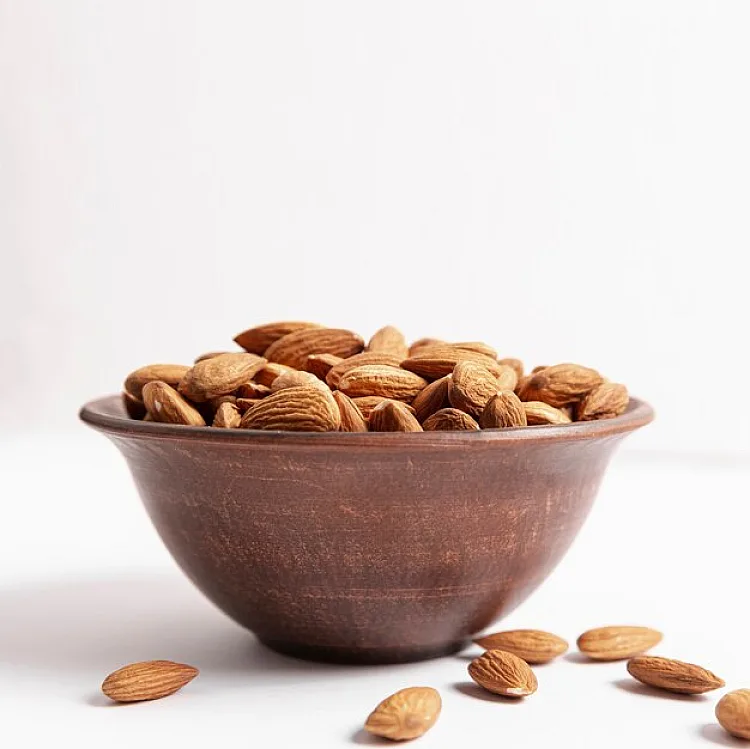
Almonds have a firm bite and a slightly earthy flavour. Indian homes soak them overnight and peel them, add them to kheer and halwa, blend them into badam milk, or slice them over breakfast bowls. Soaked almonds are softer and easier to chew. If you are deciding between raw and roasted, read our guide on raw vs roasted almonds.
Cashews: Soft, Creamy and Mildly Sweet
Cashews are softer, buttery and naturally a little sweet. They blend into silky pastes for shahi paneer and korma, form the base of kaju katli, and taste wonderful lightly roasted with a pinch of salt. Learn more about using them in our post on raw cashews.
For Snacking Straight From the Jar
Almonds feel more filling, while cashews feel more indulgent. A mix of both often gives the best of each: crunch and creaminess in the same handful.
Enjoying this read? Get more like it.
Get fresh snack inspiration and updates from our team.
Which Is Better for Your Goals?
The right nut depends on what you want from your snack. Use this as a simple guide, not a strict rule.
| Your goal | Better pick | Why |
|---|---|---|
| Staying full between meals | Almonds | More fibre and protein per handful |
| Weight management | Almonds, with portion control | More filling for the same calories |
| Vegetarian protein boost | Almonds | About 2 g more protein per handful |
| More iron and zinc | Cashews | Higher iron, zinc and copper |
| Creamy cooking and sweets | Cashews | Soft texture that blends smoothly |
| Children and elders | Soaked almonds or cashews | Both are easier to chew when soaked or chopped |
For Weight Management
Almonds have a slight edge because their extra fibre and protein make a handful more satisfying. But either nut can fit a weight management plan if you stick to a measured portion. Read why portion control matters even with healthy snacks.
For Blood Sugar Management
Plain nuts are low in sugar and pair well with carbohydrates to make a more balanced snack. Almonds contain fewer carbohydrates than cashews. If you are managing diabetes, choose unsalted, unsweetened versions and follow your doctor's advice. Our guide to healthy snacks for diabetics has more ideas.
For Kids and Older Adults
Whole nuts can be a choking risk for young children, so serve them chopped, powdered or soaked. For older adults, soaked almonds or soft cashews are easier on the teeth.
Plain, Salted or Flavoured?
Both nuts come in many forms, and the choice affects salt, oil and seasoning more than the nut itself.
- Plain: the best everyday choice. Try plain almonds and plain cashews for daily snacking, soaking and cooking.
- Lightly salted: a tasty middle ground for chai time. Salted almonds and salted cashews are good options; just keep an eye on portions if you watch your salt.
- Flavoured: perfect for parties and occasional treats. Peri-Peri Almonds, Barbeque Almonds, Barbeque Cashews and Herbs and Chilli Cashews add bold taste. Check the ingredient list for added salt and seasoning.
How Much Should You Eat in a Day?
A small handful, around 28 g, is a sensible daily portion for most adults. That works out to about 20 to 23 almonds or 15 to 18 cashews, or a mix of both. Count them into a small bowl instead of eating from the pack. Spread them across the day if you like: a few soaked almonds in the morning and a few cashews with evening chai.
Tips to Get the Most From Your Nuts
Store Them Well
Nuts contain natural oils that can turn stale with heat, light and air. Keep them in an airtight jar in a cool, dry place, and refrigerate larger stocks in summer. Our guide on how to store dry fruits and nuts covers the details.
Mix Them Into a Trail Mix
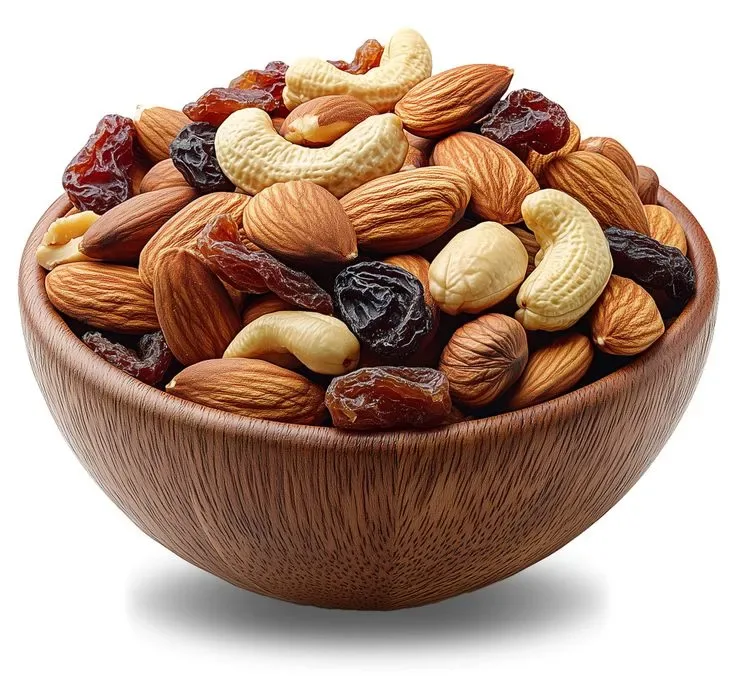
Combine almonds and cashews with roasted makhana and a few raisins for a balanced, crunchy mix. See our healthy trail mix guide for seven easy Indian combinations.
Pair Them With Fruit or Curd
A few nuts with an apple, a banana or a bowl of curd turn a small handful into a more complete snack.
Snack Smarter With The Foods Life
In the almonds vs cashews debate, there is no loser. Almonds win on fibre, protein, vitamin E and calcium, while cashews bring creaminess plus more iron, zinc and copper. For most people the smartest move is to enjoy both in sensible portions.
Stock up on plain almonds and cashews, try a flavoured pack for chai time, or explore our full dry fruits and nuts range. Hosting this weekend? Our guide to snacks for unexpected guests shows how to turn a bowl of nuts into a welcome platter.